

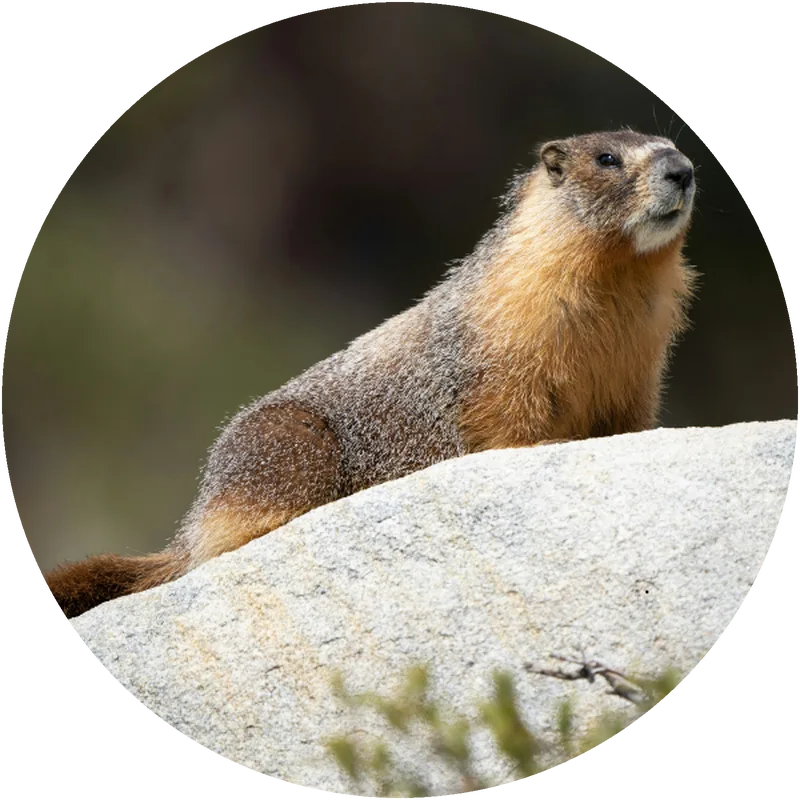


How do I know it’s a groundhog?
- A 20 to 30 cm hole with fan-shaped dirt in front of the entrance.
- One or more secondary exits, often hidden under a structure.
- A vegetable garden or flower beds eaten in a few days.
- A large, stocky brown rodent seen during the day, often sitting near its burrow.
Get a free quote
Why is a groundhog a real problem?
- A burrow can have 10 to 15 metres of galleries with several exits.
- Dug under a slab, shed, deck or pool, these galleries cause sinking and cracks.
- It devours gardens and flower beds at an impressive pace.
- Abandoned burrows are then taken over by skunks, rats and rabbits.
Protect your foundations before winter.
Free quote, reply within 6 hours on average.
Where do they settle?
Groundhogs look for soil that is easy to dig and cover overhead: under sheds, porches and decks, concrete slabs, garden houses, or at the edge of properties near fields and green spaces.
Properties on the South Shore and North Shore near farmland or vacant lots are especially affected, from May to September.
Our method
Property inspection
We locate the main entrance and secondary exits.
Humane capture
Baited live-capture cages, checked regularly.
Compliant follow-up
The animal is handled in line with Quebec regulations.
Burrow closure
Galleries filled and buried mesh at strategic points to prevent recolonization.
Landscaping advice
To make your property less attractive in the future.
A fixed price, given before we start.
Burrow closure and anti-dig mesh included.
Frequently asked questions about groundhogs
Does capture hurt the animal?
No. We use live-capture cages, checked frequently to reduce the animal’s stress. No cruel methods are used, and what follows complies with Quebec regulations.
Can I just fill in the hole?
No: the groundhog will reopen the burrow within hours or dig a new exit elsewhere, sometimes somewhere worse. And if it is trapped inside, it will die under your structure. Capture first, closure after.
When should I act?
As soon as you see the animal or a 20 to 30 cm entrance hole with fan-shaped dirt. Don’t wait for late fall: groundhogs hibernate and capture becomes impossible until spring, while the galleries keep weakening your structure through the thaw.
 Raccoons
 Squirrels
 Rats