
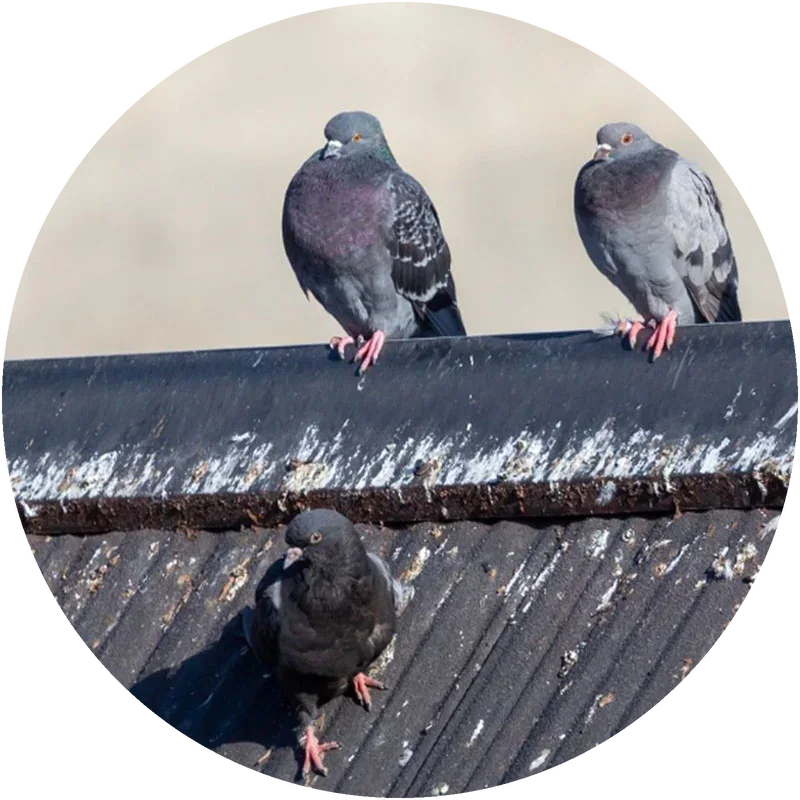

What problems do nuisance birds cause?
Pigeons, sparrows and starlings settle wherever they find shelter, a ledge and food. The result:
- Nests in ventilation ducts (dryer, range hood, air exchanger): fire and mould risk.
- Acidic droppings that corrode roofing, gutters and masonry.
- Constant noise and coming and going under soffits and cornices.
- Associated parasites (bird mites) that can move into your home.
- Unsanitary balconies, signs and window ledges.
Get a free quote
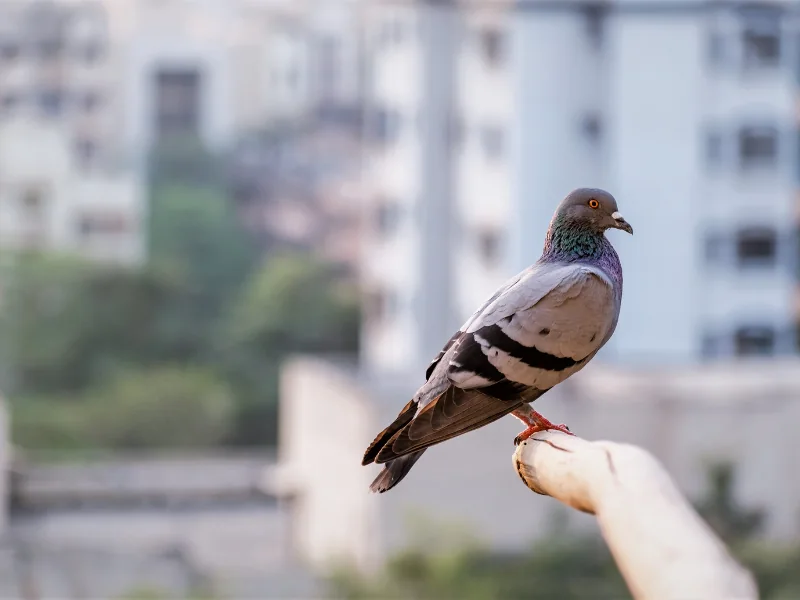
A nest in the dryer vent: why it’s urgent
It is one of the most common cases in Montréal in spring. A nest in a dryer duct blocks hot air and lint from escaping:
- The fire risk is real.
- Moisture backs up into the walls and encourages mould.
- Your dryer suddenly takes longer to dry? Have the duct checked.
Blocked vent? We act fast.
Free quote, reply within 6 hours on average.
Our humane, legal approach
Several bird species are protected by law. Our methods keep them away without harming them:
Nest removal
At the permitted time and in line with regulations.
Netting, spikes and mesh
Installed on nesting and roosting spots: ledges, cornices, balconies, signs.
Protected ventilation ducts
Mesh designed so it doesn’t restrict airflow.
Cleaning and disinfection
Of droppings-soiled surfaces, with protective equipment.
Custom solutions
Adapted to your building’s architecture, residential or commercial.
A fixed price, given before we start.
Gentle methods, lasting results.
Frequently asked questions about nuisance birds
Do you hurt the birds?
No. We use exclusion and deterrence only: birds are kept away and prevented from returning, unharmed. Nest removal follows protected-species regulations.
Are pigeon droppings dangerous?
They can be: accumulated droppings can harbour fungi and bacteria whose spores are inhaled during cleaning. That is why we include cleaning and disinfection with proper protective equipment.
Won’t the birds just come back?
Not if access is closed. That is the whole value of our work: netting, spikes and mesh make nesting spots permanently inaccessible.
My dryer takes longer to dry. Could it be a nest?
It could, especially in spring. A nest in the duct blocks hot air and lint from escaping: have it checked quickly, because the fire risk is real.