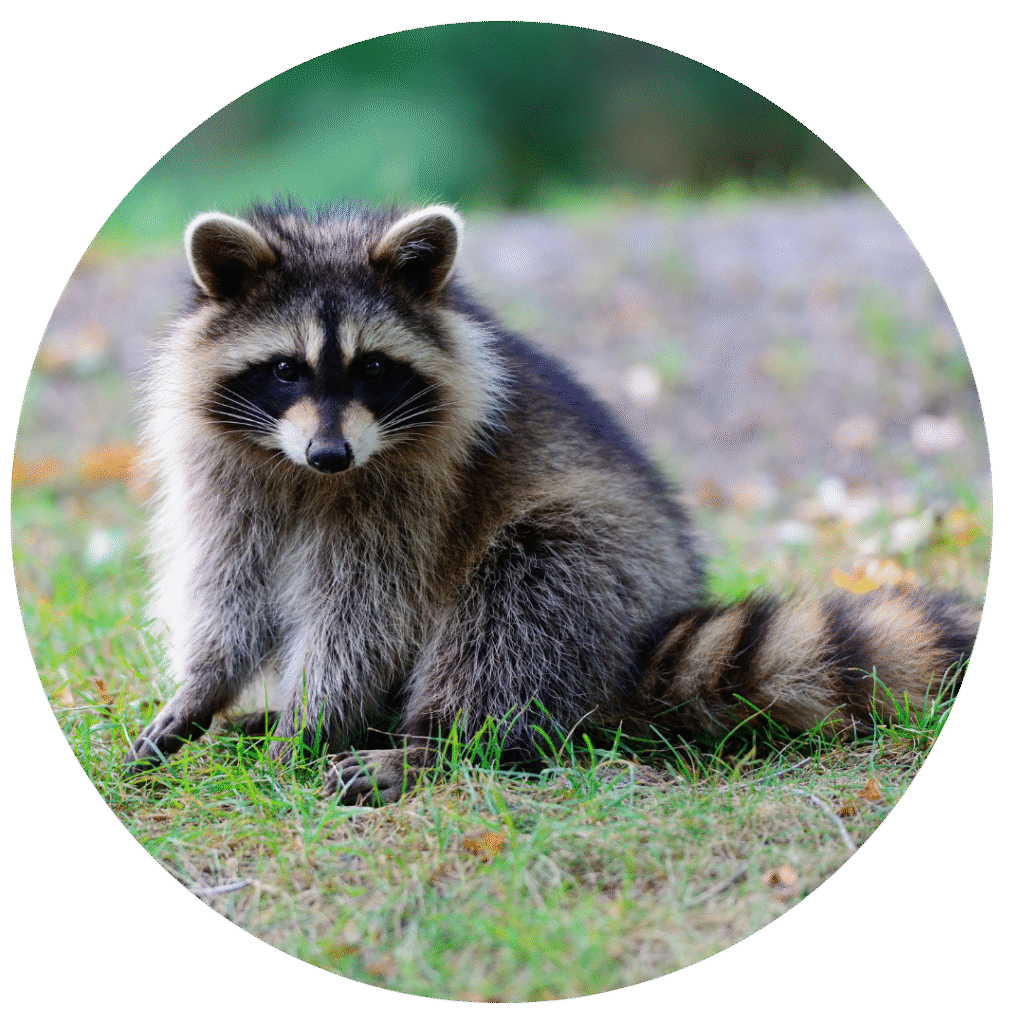

Un raton laveur s’est invité chez vous ? Nous avons la solution !
Le raton laveur, c’est notre affaire. On s’occupe de tout.


Ces animaux sont intelligents, habiles et persistants.
Ils peuvent :
Grimper sur votre toiture et s’introduire par un soffite ou une cheminée
Arracher l’isolant, détériorer la structure, voire ronger les câbles électriques
Fouiller vos poubelles chaque nuit, laissant des déchets partout
Transmettre des maladies comme la rage ou la leptospirose
Mettre bas dans votre entretoit, ce qui complique grandement l’intervention
Et surtout : s’ils trouvent un endroit chaud et sûr, ils ne repartent pas sans y être forcés.
Plus vous attendez, plus les dégâts et les risques augmentent.
Un seul raton laveur aujourd’hui… peut devenir une famille entière demain.

L’intervention repose sur une approche structurée, sécuritaire pour les occupants et respectueuse de l’animal :
Identification des traces de passage et des points d’accès
Inspection du grenier, du cabanon ou des structures extérieures
Capture du raton laveur à l’aide d’un dispositif de piégeage adapté
Relocalisation de l’animal dans un environnement naturel, à bonne distance des habitations
Colmatage des ouvertures ou fissures permettant l’intrusion
Mesures préventives si nécessaire pour éviter un nouvel épisode
Cette méthode vise une résolution durable du problème, sans recours à des techniques nuisibles ou dangereuses.

Non, s’il a trouvé un endroit chaud, sécurisé et propice à la reproduction, il est peu probable qu’il parte de lui-même. Il peut rester plusieurs semaines, voire toute la saison, surtout s’il a fait une portée.
Évitez de bloquer l’accès de l’animal ou de tenter de le faire fuir vous-même. Cela pourrait le rendre agressif ou provoquer des dégâts. Ne laissez pas de déchets ou de nourriture accessibles à l’extérieur, et restez à distance.
Le cout d’une intervention standard commence à partir de 275+tx – garantie incluse.
Oui, mais uniquement sous certaines conditions. La capture doit se faire avec du matériel conforme et l’animal doit être relocalisé à une distance minimale selon les règles en vigueur au Québec. Toute intervention doit respecter la réglementation sur la faune.
Les ratons laveurs sont généralement considérés comme des animaux sauvages dangereux en raison de plusieurs facteurs. Ils peuvent porter la rage et peuvent être porteurs de parasites comme le ver du raton laveur. Bien qu’ils soient généralement effrayés par les humains, ils peuvent se défendre s’ils se sentent menacés ou si leurs nids ou leurs petits sont en danger.
Porteurs de la rage: Ils peuvent transmettre la rage aux humains et aux animaux de compagnie.
Porteurs de parasites: Ils peuvent être porteurs de parasites comme le ver du raton laveur (Baylisascaris procyonis) qui peut infecter les humains et les animaux.
Comportement défensif: Ils peuvent mordre et griffer s’ils se sentent menacés.
Impact sur les animaux de compagnie: Ils peuvent être des prédateurs pour les animaux de compagnie et peuvent leur transmettre des maladies et des parasites.
Dommages aux propriétés: Ils peuvent causer des dommages aux jardins, aux poubelles et même aux maisons.